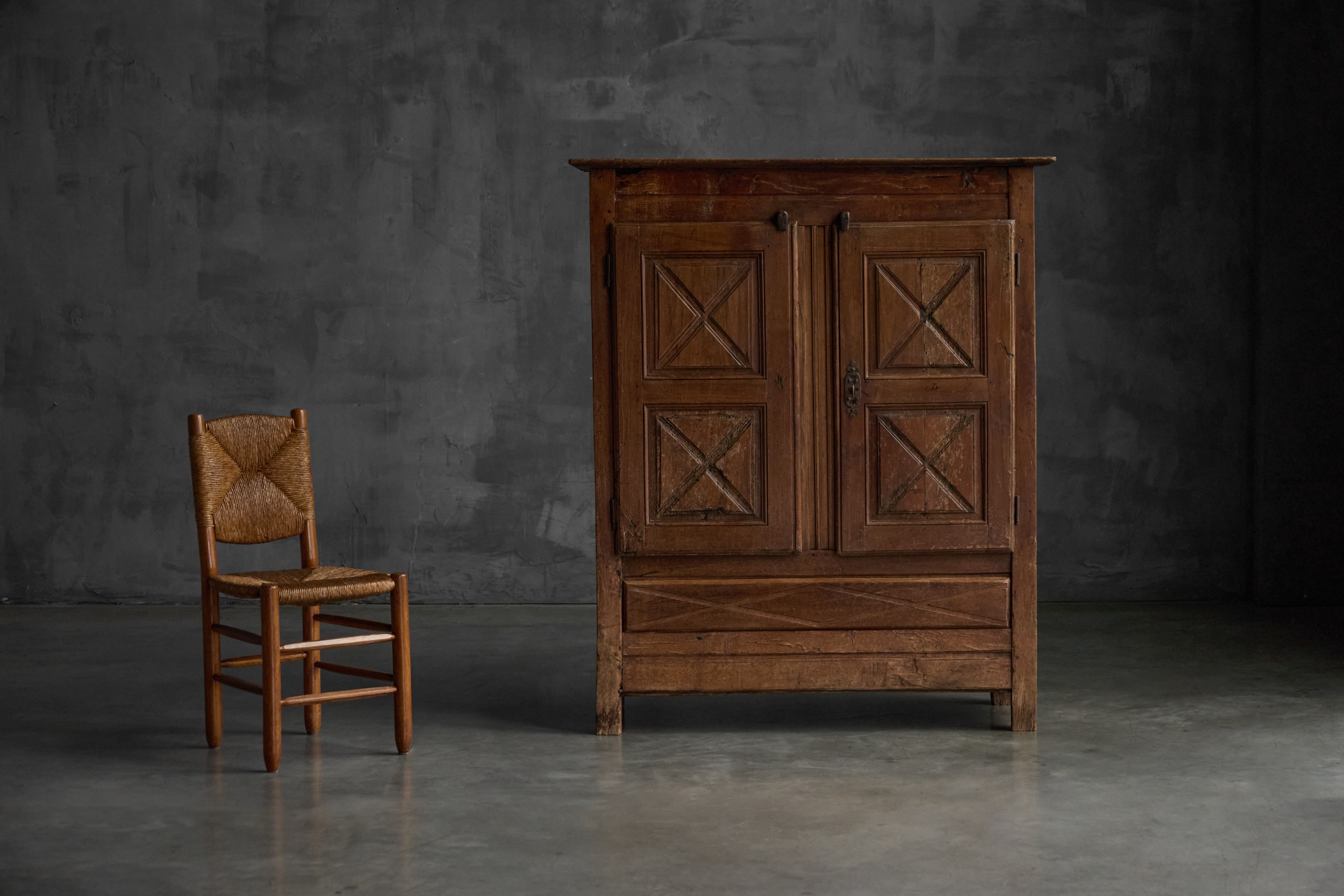
Folk art has long been an essential expression of culture, craftsmanship, and everyday life. Its beauty comes from authenticity rather than perfection, making it increasingly relevant to contemporary interiors. Designers today are rediscovering the value of handmade surfaces, natural materials, traditional techniques, and objects that carry a sense of history. This renewed appreciation connects strongly with Vernacular design, where furniture and architecture emerge from local materials, practical needs, and cultural traditions.
The simplicity associated with Alpine Design provides another important source of inspiration. Timber, stone, organic textures, and practical construction create interiors that feel warm without unnecessary decoration. The Rural character of these spaces often encourages a closer relationship with nature. This atmosphere can be enhanced through Rustic Furniture, where visible grain, handcrafted construction, and natural imperfections become defining aesthetic features rather than flaws.
The philosophy of Wabi Sabi complements this approach by celebrating imperfection, impermanence, and authenticity. A worn wooden surface, irregular grain, or subtle variation in material can give furniture an individual identity. This perspective creates interiors that feel lived-in and personal instead of overly polished. It also encourages homeowners to select pieces for their character and longevity rather than following short-lived decorative trends.
Architectural history offers numerous examples of this philosophy. Dom Hans van der Laan explored proportion, spatial relationships, and architectural harmony with remarkable discipline. His approach demonstrates how simplicity can produce visual richness when scale and material are carefully considered. The expressive craftsmanship of the Amsterdamse School provides a contrasting influence, introducing sculptural details, decorative geometry, and strong architectural character.
Another influential movement is Art Deco, known for its geometric compositions, luxurious materials, and confident silhouettes. While its aesthetic is more decorative, many of its principles remain relevant in contemporary furniture. Strong forms, carefully selected finishes, and attention to detail can bring sophistication to a modern interior without overwhelming the architecture.
The legacy of Mid-Century Design further demonstrates how functionality and visual clarity can coexist. Designers from this period focused on comfortable proportions, innovative materials, organic shapes, and efficient construction. Brazilian Design expanded these ideas through expressive woodworking and a deep connection with natural surroundings. Timber became more than a construction material; it became a central visual and tactile element within furniture and architecture.
The work of Pierre Chapo illustrates the powerful relationship between solid wood, craftsmanship, and sculptural form. His furniture demonstrates how robust materials can be transformed into pieces with remarkable visual lightness. Charlotte Perriand similarly explored the relationship between people, objects, architecture, and everyday life. Her work remains influential because it considers furniture as an essential part of how spaces function and how people experience them.
This principle is central to Functional Art, where usefulness and artistic expression are not separate ideas. A dining table, chair, cabinet, or lounge can perform its practical role while simultaneously becoming a defining element within a room. Jean Prouvé demonstrated this philosophy through innovative construction, engineering, and material efficiency. His work continues to influence contemporary designers interested in honest structures and purposeful design.
The collaboration between Afra & Tobia Scarpa also produced furniture that balanced comfort, technology, craftsmanship, and sophisticated form. Their work demonstrates how thoughtful construction can create pieces that remain relevant across generations. Mario Bellini introduced another dimension through expressive silhouettes and generous forms, proving that furniture can become architectural in its presence while remaining highly functional.
The influence of the Camaleonda continues to be visible in contemporary interiors through modular seating, flexible arrangements, and sculptural comfort. Its approach encourages furniture to adapt to changing lifestyles rather than dictating a fixed layout. Meanwhile, Nakashima represents a deeply material-focused philosophy in which wood retains its natural character. Grain patterns, organic edges, and distinctive timber qualities become central to the identity of each piece.
The architectural influence of Pierre Jeanneret offers another valuable reference. His furniture combined practical construction with strong geometric proportions, demonstrating how everyday objects can possess architectural significance. These historical influences provide a rich foundation for contemporary collections that value craftsmanship, natural materials, and individuality.
Goldwood by Boris brings together many of these ideas through a distinctive approach to furniture and interiors. Rather than treating furniture as simple decoration, the philosophy focuses on material presence, sculptural form, proportion, and atmosphere. The work associated with boris devis reflects an appreciation for objects that can establish a strong relationship with their surroundings.
For design enthusiasts exploring Goldwood by Boris furniture, the appeal lies in the ability of individual pieces to complement diverse interiors. Goldwood by Boris Antwerp represents a connection with a city known for creativity, architecture, art, and design culture. Within Goldwood by Boris interiors, furniture can become part of a carefully layered environment where historic references, contemporary forms, and natural materials work together.
The perspective of the Boris Devis designer identity is particularly relevant to those seeking interiors with individuality. Instead of relying on a single stylistic language, a room can combine Nakashima, Pierre Chapo, modern European influences, and traditional craftsmanship. The result can feel collected over time rather than designed according to one rigid formula.
The Goldwood by Boris collection therefore fits naturally into a broader conversation about timeless furniture. Its relationship with Folk art, Vernacular traditions, Wabi Sabi, and Functional Art demonstrates how different design histories can coexist within one contemporary environment. A carefully selected wooden table can provide warmth, while sculptural seating can introduce modernity and character.
Ultimately, successful interiors depend on balance: between old and new, function and expression, simplicity and detail. goldwoodbyboris reflects this philosophy by presenting furniture as an integral part of architectural experience rather than an afterthought. Through thoughtful materials, considered proportions, and distinctive craftsmanship, interiors can become spaces that feel authentic, comfortable, and enduring. goldwoodbyboris demonstrates how furniture inspired by historical movements can still speak to contemporary lifestyles, creating environments where craftsmanship, individuality, and timeless design remain at the center of the experience.
Congrats! You’ve Finished This Blog.