Artificial grass has become a popular choice for homeowners, businesses, schools, and sports facilities because it offers a lush green appearance with minimal maintenance. However, achieving a durable and professional-looking installation depends on using the right Artificial Grass Adhesive. Whether you’re installing turf on concrete, decking, or other surfaces, selecting the correct adhesive ensures your grass remains firmly in place for years.
In this guide, we’ll explain why choosing a high-quality Artificial Grass Adhesive matters, how to select the best adhesive for artificial grass to concrete, and the steps to achieve a flawless installation.
Why Artificial Grass Adhesive Is Important
A quality Artificial Grass Adhesive is designed to create a strong bond between artificial turf and the installation surface. Unlike standard glues, these adhesives are formulated to withstand changing weather conditions, moisture, foot traffic, and temperature fluctuations.
Using the right adhesive provides several benefits:
- Strong and secure bonding
- Weather-resistant performance
- Long-lasting durability
- Reduced edge lifting
- Professional finish
- Safe installation for residential and commercial projects
Without a reliable adhesive, artificial grass can shift, wrinkle, or separate from the surface over time.
Choosing the Right Artificial Grass Adhesive
Not every installation requires the same type of adhesive. The ideal product depends on the installation surface, environmental conditions, and expected usage.
When selecting an Artificial Grass Adhesive, look for these features:
Excellent Bond Strength
A premium adhesive should securely hold the turf even under heavy foot traffic.
Weather Resistance
Outdoor installations require adhesives that resist rain, UV exposure, and temperature changes.
Flexible Performance
A flexible adhesive helps accommodate minor surface movement without cracking.
Easy Application
Professional-grade adhesives should spread evenly and cure efficiently.
Safe Formula
Choose products with low VOC emissions whenever possible for a safer installation environment.
Best Adhesive for Artificial Grass to Concrete
Installing artificial grass over concrete has become increasingly common for patios, balconies, rooftops, and play areas. Choosing the correct adhesive for artificial grass to concrete is essential because concrete provides a hard, non-porous surface that requires a strong bonding solution.
An effective adhesive for artificial grass to concrete should provide:
- High initial grab
- Long-term durability
- Water resistance
- Compatibility with concrete surfaces
- Flexibility after curing
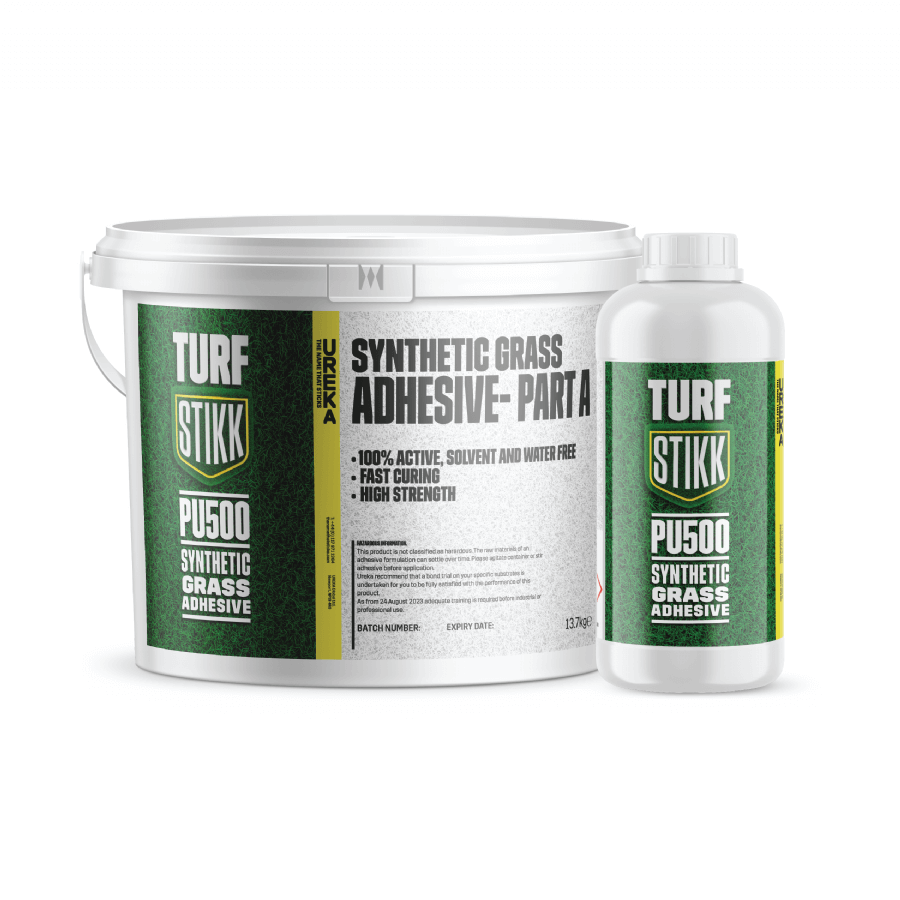
Polyurethane-based adhesives are often preferred because they offer exceptional bonding performance while remaining flexible after curing.
Preparing Concrete Before Installation
Even the best Artificial Grass Adhesive cannot compensate for poor surface preparation. Proper preparation improves adhesion and extends the life of the installation.
Before applying the adhesive for artificial grass to concrete, follow these steps:
Clean the Surface
Remove dust, dirt, grease, oil, and loose debris thoroughly.
Repair Damage
Fill any cracks or holes in the concrete to create a smooth surface.
Ensure Dryness
Concrete should be completely dry before adhesive application.
Test the Surface
Confirm the concrete is level and free from contaminants that could weaken the bond.
Proper preparation significantly improves adhesive performance.
How to Apply Artificial Grass Adhesive
Professional installation follows a straightforward process.
Step 1: Position the Grass
Roll out the artificial grass and allow it to relax for several hours.
Step 2: Fold Back the Edges
Expose the installation surface while keeping the turf properly aligned.
Step 3: Apply the Adhesive
Spread the Artificial Grass Adhesive evenly using a notched trowel according to the manufacturer’s recommendations.
Step 4: Lay the Turf
Carefully press the grass into the adhesive while removing any trapped air.
Step 5: Secure the Bond
Apply consistent pressure across the surface to ensure maximum contact.
Step 6: Allow Proper Curing
Avoid walking on the installation until the adhesive has fully cured.
Common Mistakes to Avoid
Even experienced installers can encounter problems if proper techniques are ignored.
Avoid these common mistakes:
- Applying adhesive on wet concrete
- Using household glue instead of specialized Artificial Grass Adhesive
- Applying too much or too little adhesive
- Walking on the turf before curing
- Ignoring manufacturer curing times
- Installing during unsuitable weather conditions
Careful installation leads to a stronger and longer-lasting bond.
Maintenance Tips After Installation
Although artificial grass requires minimal maintenance, proper care helps preserve both the turf and adhesive.
Helpful maintenance practices include:
- Remove leaves and debris regularly.
- Brush the grass fibers occasionally.
- Clean spills promptly.
- Inspect edges for lifting.
- Avoid dragging heavy furniture across the turf.
- Follow recommended cleaning procedures.
With quality installation, your adhesive for artificial grass to concrete will continue performing for many years.
Where Artificial Grass Adhesive Is Commonly Used
Professional installers rely on Artificial Grass Adhesive across numerous applications, including:
- Residential gardens
- Rooftop terraces
- Apartment balconies
- Children’s play areas
- Schools
- Commercial landscapes
- Sports facilities
- Exhibition displays
- Outdoor entertainment spaces
- Pet-friendly areas
Its versatility makes it an essential component of successful artificial turf installations.
Final Thoughts
Selecting the right Artificial Grass Adhesive is one of the most important decisions when installing synthetic turf. A premium adhesive provides superior bonding, excellent weather resistance, and long-lasting durability across a variety of surfaces.
When working on patios, rooftops, or outdoor entertainment areas, using a high-quality adhesive for artificial grass to concrete ensures your installation remains secure, attractive, and maintenance-friendly. By preparing the surface properly, applying the adhesive correctly, and following recommended curing procedures, you can enjoy beautiful artificial grass that stays firmly in place for years to come.
Congrats! You’ve Finished This Blog.